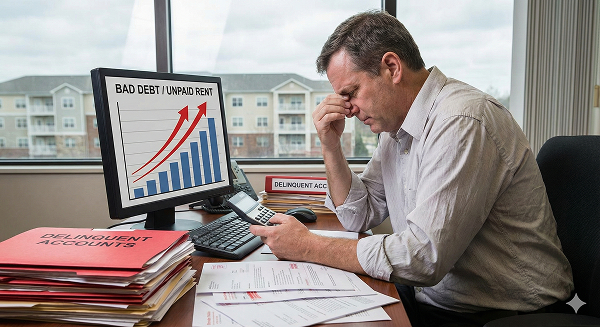
The Low-Barrier Trap: Why Deposit Alternatives Drive Up Bad Debt
January 17, 2026
In the race to increase occupancy, the industry has leaned heavily on "deposit-free" living. By replacing the traditional security deposit with a non-refundable monthly fee, operators lowered the barrier to entry, hoping to move residents in faster.
But years of data is revealing a worrisome truth: lowering the barrier to entry also lowers the barrier to exit. While these alternatives solve a move-in friction, they often create a much larger problem at the end of the lease—an increase in bad debt and "skips." Here is why the monthly-fee model is often a leading indicator of rent default.
1. The Loss of "Skin in the Game"
Psychologically, the traditional security deposit acts as a commitment device. When a resident has a full month’s rent sitting in an account, they have a tangible, financial incentive to stay compliant with the lease.
- The Incentive Gap: With a deposit alternative, the resident pays a non-refundable fee. Because that money is "gone" the moment it’s paid, there is no reward for good behavior.
- The "Skip" Calculation: When a resident faces financial stress, they prioritize payments based on consequences. If they have no deposit to lose, the "cost" of skipping out on the final month of rent feels lower. They aren't walking away from their money; they’re just walking away.
2. The Correlation Between Savings and Stability
The ability to pay a security deposit is one of the most reliable (yet overlooked) indicators of a resident’s financial resilience.
Research, including studies from the Urban Institute, shows that households with even modest savings are significantly less likely to face eviction or miss utility payments.
- The Screening Filter: A security deposit isn't just a pool of funds; it’s a final "stress test" of a resident's liquidity.
- The Risk Profile: Residents who must choose a monthly fee because they lack the cash for a deposit are, by definition, living with zero financial cushion. When an unexpected expense hits—a car repair or a medical bill—rent is the first thing to go. By aggressively pushing deposit alternatives, properties inadvertently fill their rent rolls with the highest-risk profiles.
3. The "Insurance" Misconception
One of the greatest drivers of bad debt in the alternative space is simple confusion. Many residents believe that the monthly fee they pay is rent insurance that covers them if they can’t pay.
- The Reality: When a resident falls behind, they may assume the "deposit alternative" they've been paying into for a year will cover their arrears.
- The Blowback: By the time they realize the product only protects the landlord—and that the surety company will eventually sue them to recover that money—the bad debt has already materialized on your ledger.
How Whale Reduces Bad Debt
Whale treats the security deposit as a financial asset, not a barrier.
- Reduced Fraud: As part of opening a Whale account, residents must complete a KYC (“Know Your Customer”) which includes a comprehensive identity verification check to make sure the person moving in is the person they claim to be.
- Verification of Funds: By requiring a digital deposit into a high-yield account, you confirm the resident has the financial stability to support the lease.
- Retained Incentives: Because the money (and the interest) belongs to the resident, they have a "wealth-building" reason to fulfill their lease obligations.
- Seamless Transitions: If a resident truly is cash-strapped, Whale can run alongside an alternative—but it shouldn't be the default. By making the cash deposit the high-yield, "smart" choice, you attract and retain the residents who are statistically least likely to end up as bad debt.
At Whale, we make the traditional deposit easy and financially rewarding, ensuring you keep the 1:1 cash coverage that keeps your bad debt low and your NOI high. Reach out to learn more.